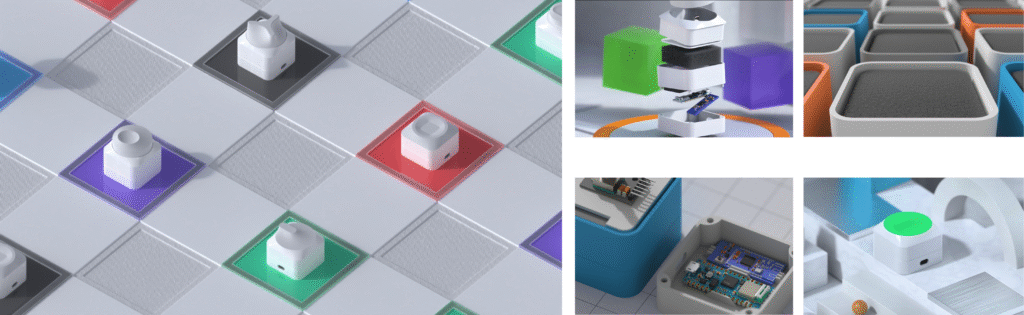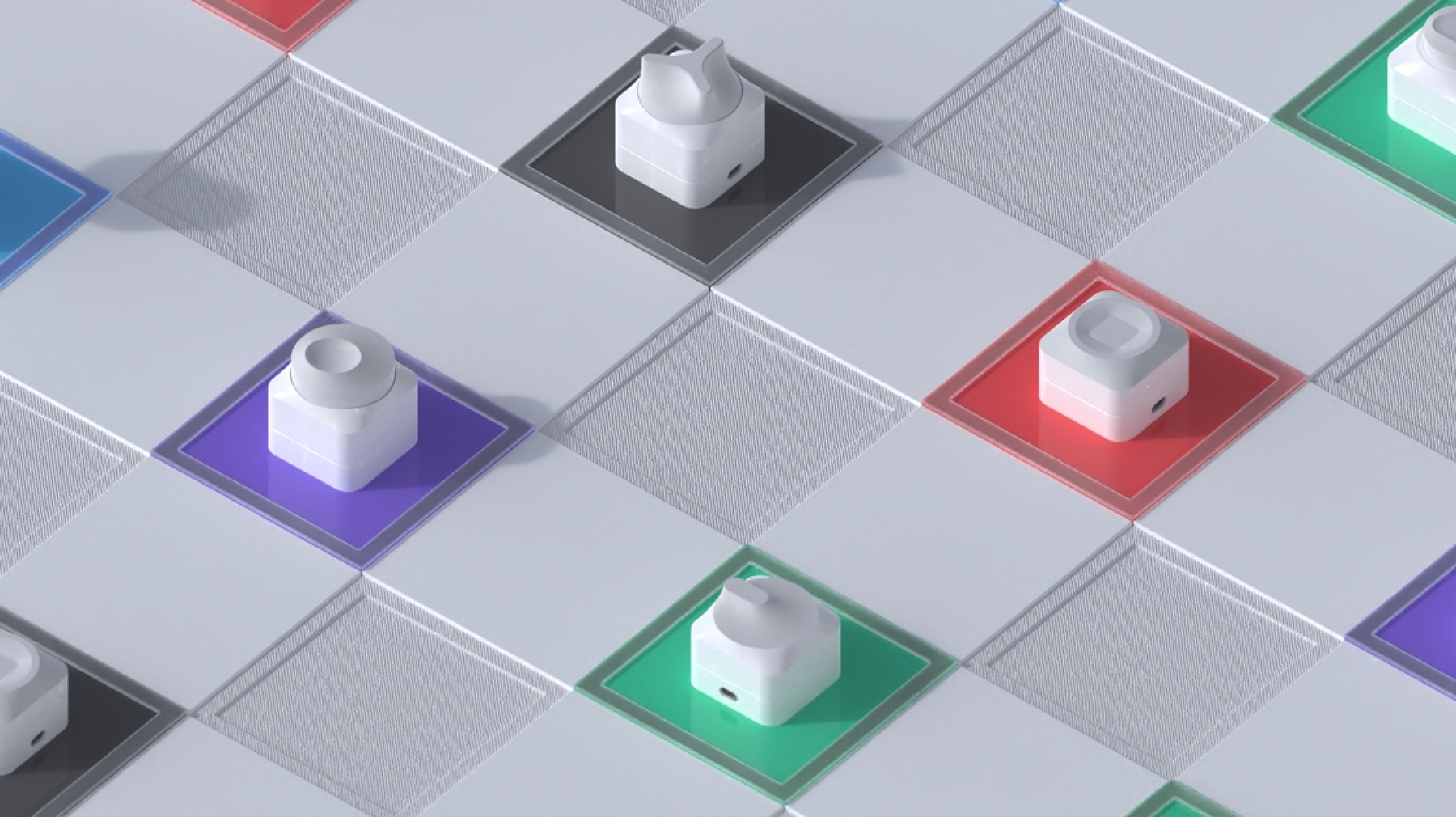
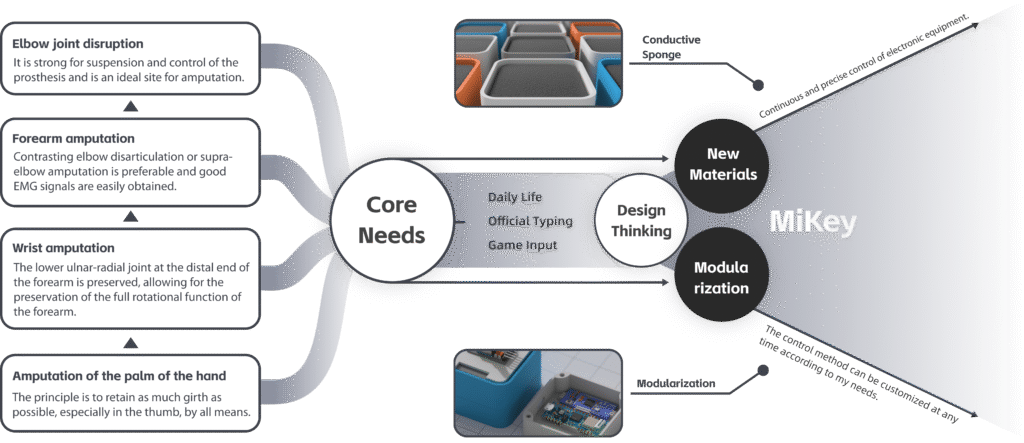
Mikey is an input accessory system designed to make interactions with electronic devices easier and more accessible for people with disabilities. With Mikey’s assistance, users can perform daily tasks, handle office work, enjoy gaming experiences, and achieve precise, customizable control over electronic devices. Its modular design allows users to tailor the control methods to their personal needs and specific circumstances at any time.
Context
1. Large population base of persons with physical disabilities
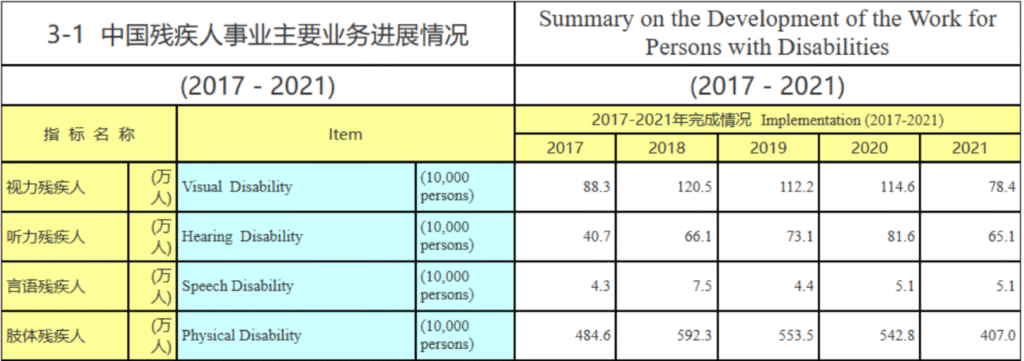
Globally, over 1 billion people, or 15% of the population, have physical disabilities. In China, more than 85 million people live with various disabilities, including over 24 million with physical disabilities, making up 29% of all cases—the largest proportion. Physical disabilities affect mobility due to impairments in the trunk, limbs, or related functions. The evolving technological world should be inclusive, offering equal opportunities for everyone to experience joy and freedom.
2. Lack of accessible assistive design for electronic devices
Most products today assume users can perform two-handed inputs, such as pressing shortcut keys, combining game controls, or using commands like zooming with Ctrl and the cursor. When users lose the ability to control devices with their hands, using these devices becomes much harder. Globally, only about 1 in 10 people with disabilities have access to assistive technology. As input systems grow more complex, controllers become less accessible, worsening the experience for people with disabilities.
Process

Target User
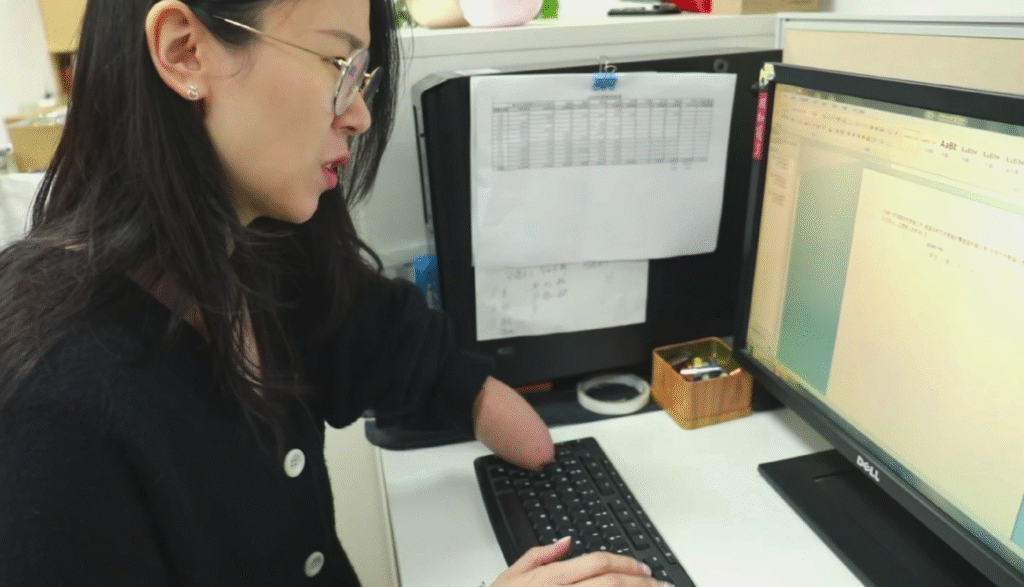
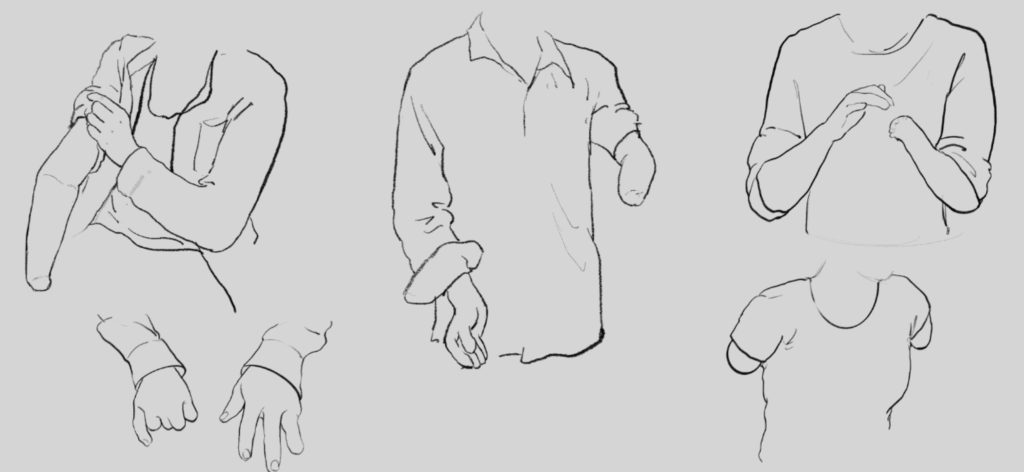
Our target group is individuals with upper limb amputations, focusing on those with wrist amputations, missing fingers, or partial hand loss. These users aim to improve their lives through personal effort and have diverse needs in computer input, gaming, entertainment, and music creation. Our products help them reconnect with the world. While currently designed for wrist amputations, the series may also support those with elbow amputations, one-arm loss, or both arms missing.
Competitive Analysis

The needs of the physically disabled population for products are centered on the following areas:
-
- Fusion of appearance and functionality
-
- Physically disabled individuals prefer products with ergonomic designs and aesthetically pleasing appearances, while also being functional enough to support their daily lives and work. Functionally, they value ease of use and sufficient interactive features to meet their basic needs.
-
- Portability of product use
-
- The physically disabled population wants products that are easier to use and can be operated through smart devices such as cell phones;
-
- Better user experience
-
- People with physical disabilities hope that the products are more ergonomically designed in terms of interaction; people with physical disabilities hope that the products can help them rehabilitate better, and they also expect that the products can bring more socialization opportunities and ways.
-
- Intelligent & Personalized
-
- For the demand of intelligence and personalization, the physically disabled people hope that the products can be intelligently adjusted according to their own situation;
-
- Other requirements
-
- Combining the daily rehabilitation needs of the physically disabled, it combines the boring routine of rehabilitation training with the daily use of the product.
-
- Fusion of appearance and functionality
Product Definition
Innovation Points
-
- Fits the limb characteristics of the wrist amputation group at the amputation site and conforms to the user’s common posture.
- Use of low-cost, soft sponge material to replace part of the electronic component structure, providing a more comfortable interactive experience
- Mikey focuses on functional support for recreation and telecommuting, rather than daily tasks like holding objects. Since forearm amputations often result from acquired surgeries, the product could also integrate rehabilitation training in the future to improve forearm control for this group.
- Provide users with customizable inputs, according to the definition of different input situations corresponding to the trigger signal and the situation, any combination of arrangements.
- Continuous analog signal input for more accurate input signals.

Thesis Reference
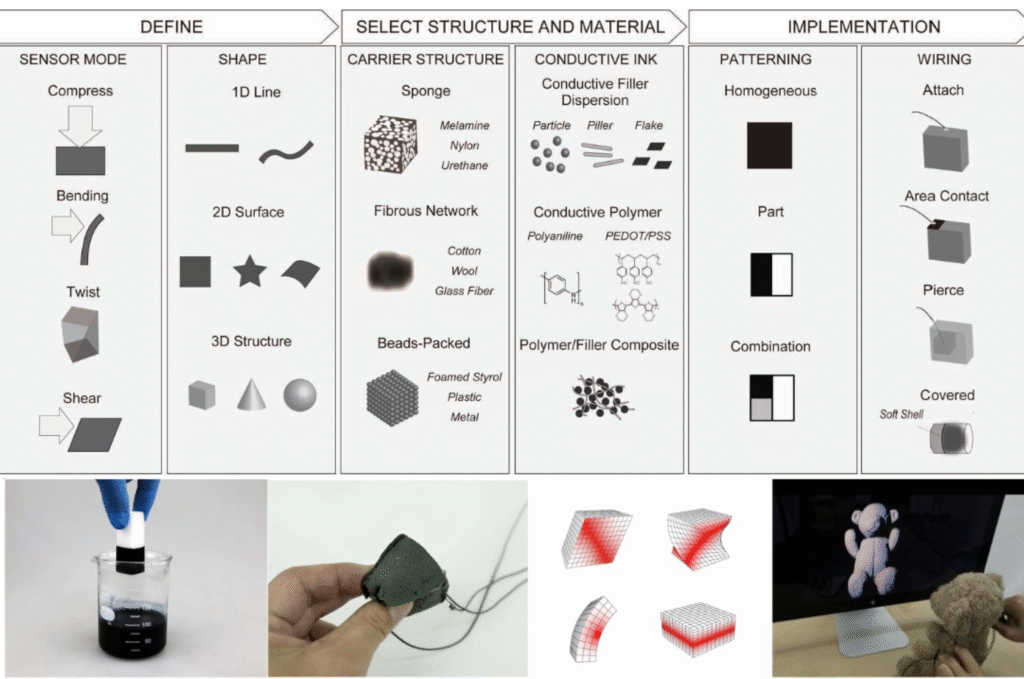
FoamSense: Design of Three Dimensional Soft Sensors with Porous Materials
Core Concept
New soft sensors that measure the deformation state of soft objects, such as compression, bending, twisting, and shearing, to name a few. Three common carrier structures, shaping methods are proposed.
Inspirations
Soft sensors offer the possibility to perform complex inputs more intuitively and can utilize flexible surfaces to generate new manipulation methods. The possibility of multiple sensors embedded in a single carrier material.
Key Contribution
Proposes new soft sensors that can detect various deformations without any hard parts; demonstrates the possibility of improving sensors with digital fabrication techniques;
Shortcomings
The three application scenarios presented foamsense only attach + wire connections to the surface, lacking consideration of the experience of use, the overall design between the sensor and the various materials.
foamin: A Deformable Sensor for Multimodal Inputs Based on Conductive Foam with a Single Wire
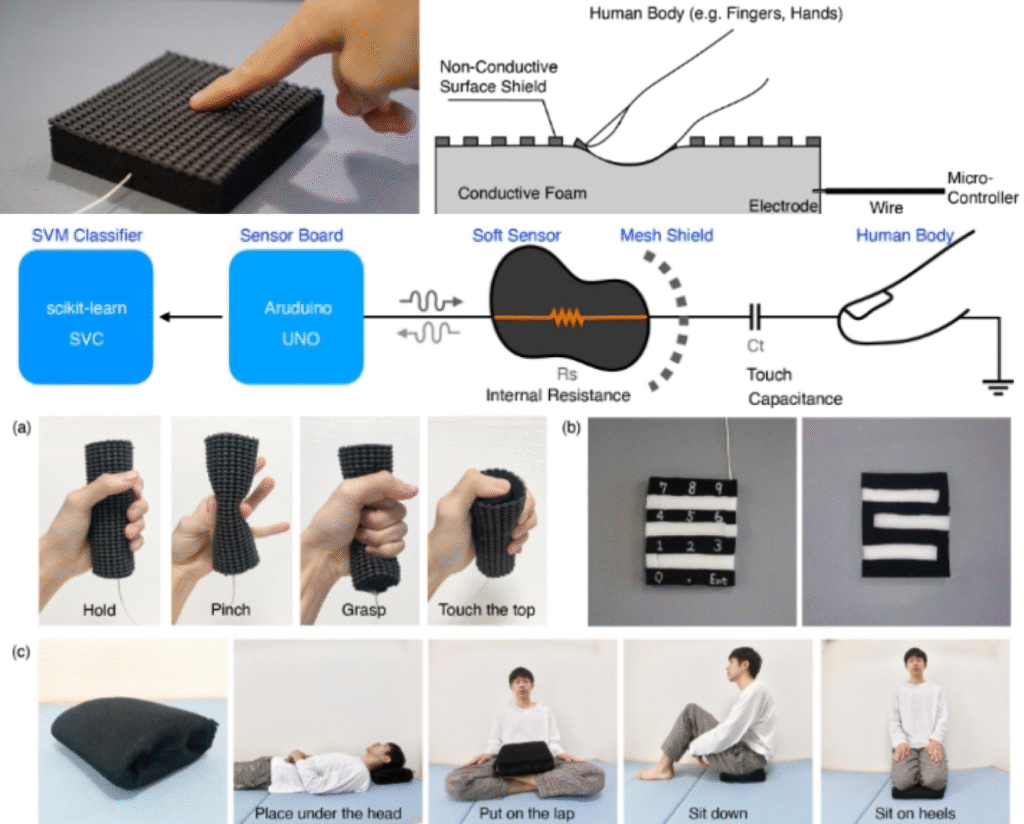
Core Concept
Soft sensors made of variable materials capable of sensing touch or gesture, including conductive foams with a single wire, and utilizing foam impedance measurement techniques at multiple frequencies.
Inspirations
A system is formed with a small number of soft sensors to detect multiple gestures. Categorize the different gestures, pressures, and positions of the user using dataset approach.
Key Contribution
Proposing SFCS-based soft sensors connected to a single wire to recognize multiple touch and deformation inputs; A surface design with mesh shielding to improve detection performance; Presenting examples of foam-based sensor applications;
Shortcomings
The proposed application scenarios all lack a wiring design appropriate to the scenario, while the interface lacks a feedback design for user input.
Technology Practice

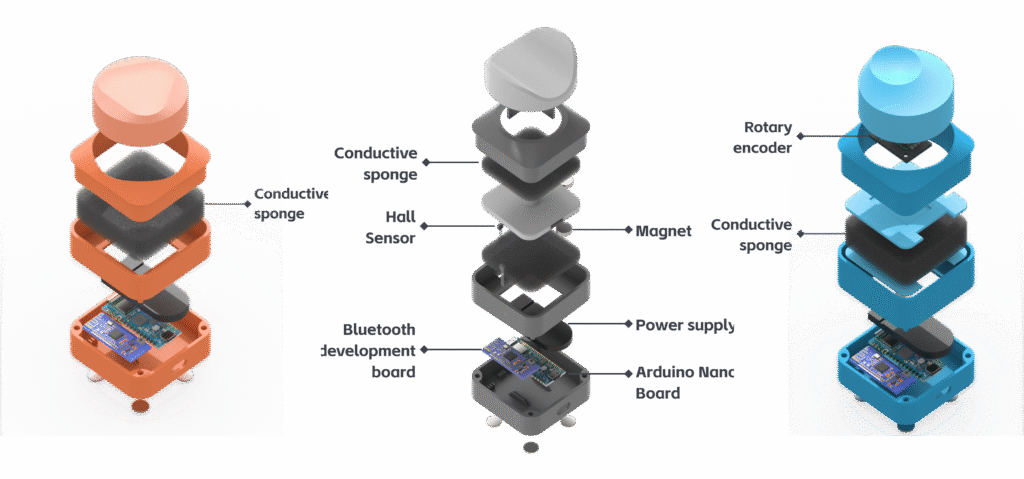
We utilized 3D printed shell structures and conductive sponges to assemble and fabricate a number of input devices in combination with components such as the Arduino Nano development board. Using the conductive sponge to receive external force to change the resistance characteristics, as well as Hall sensors and other components, in the board to obtain user input; through the serial port to achieve the development board and the user’s computer communication; and ultimately the user’s computer through the Python program to process the device signals, through the two Python libraries, PyAutoGUI and PyDirectInput Windows The user’s computer will process the device signals through the Python program PyAutoGUI and PyDirectInput, which are two Python libraries for Windows.
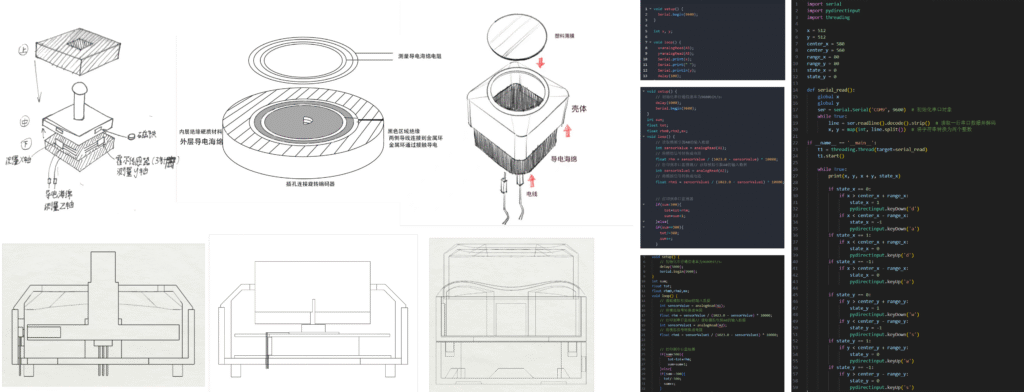
Production Process
We tested different versions and used them to find the material that combines tactility and input accuracy.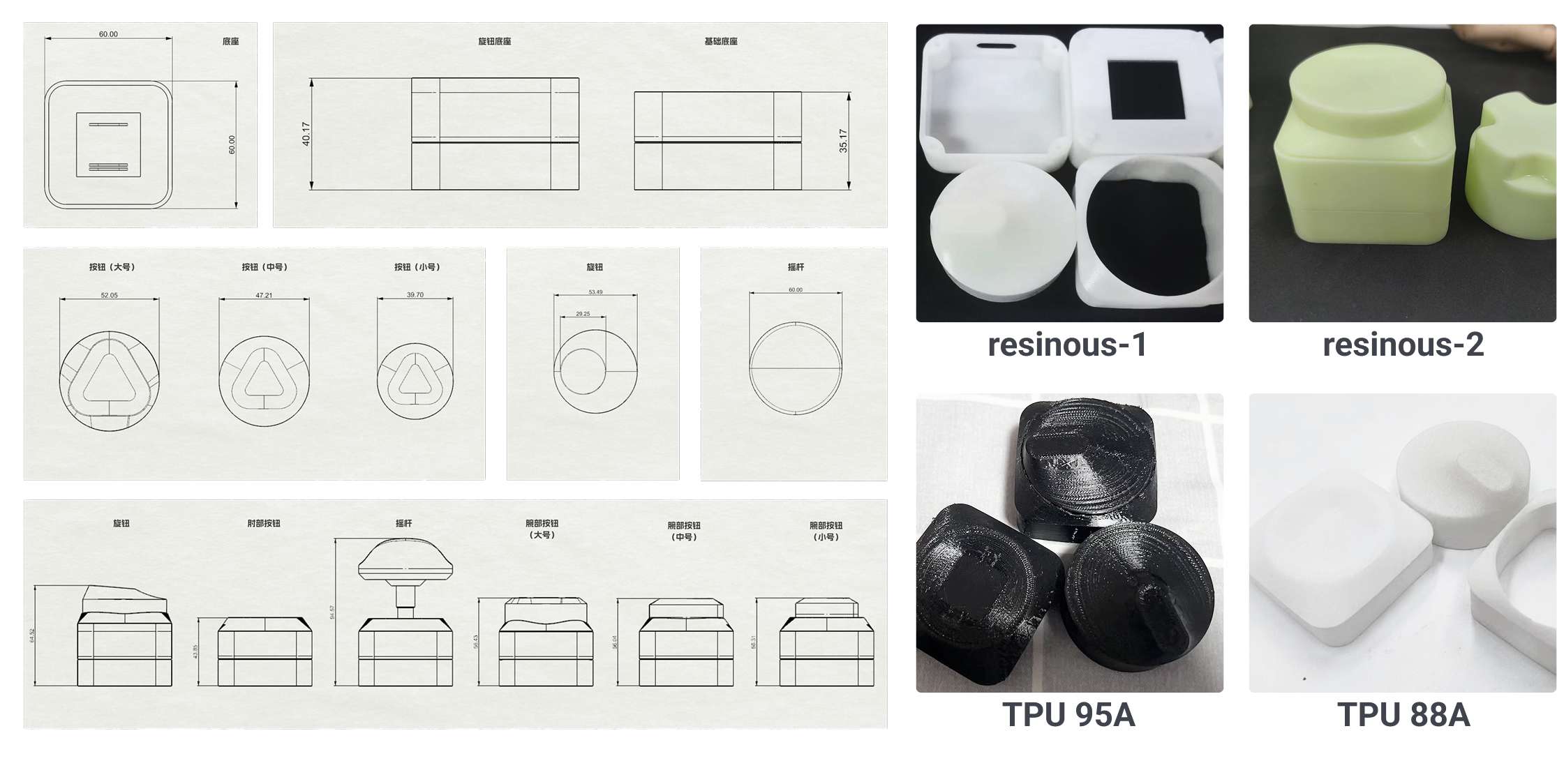
Testing Process
We went through the steps of 3D printing, model modification and assembly, circuit connection and testing to gradually complete the technical testing.
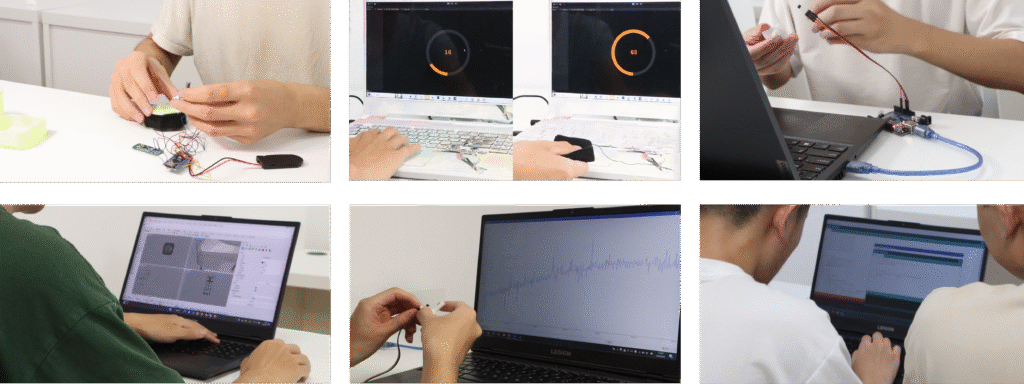
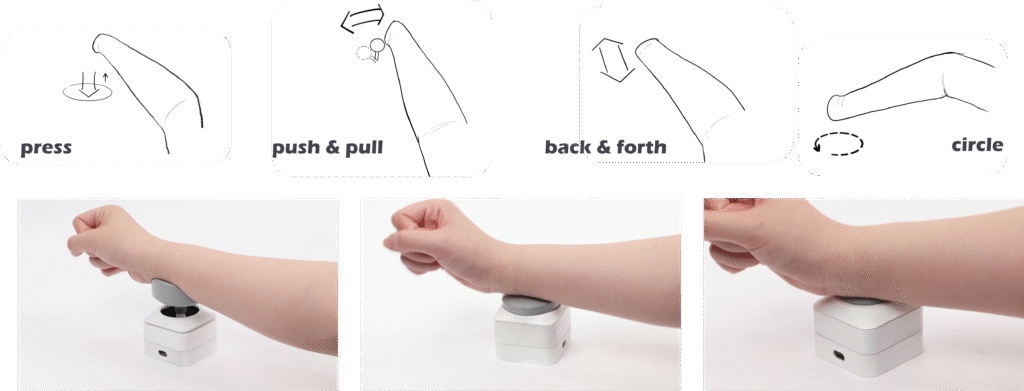
We researched the common wrist interaction movements of the target group: circle, press, push and pull, back and forth, and based on this, we designed the product shape and interaction movement design.
Prototype
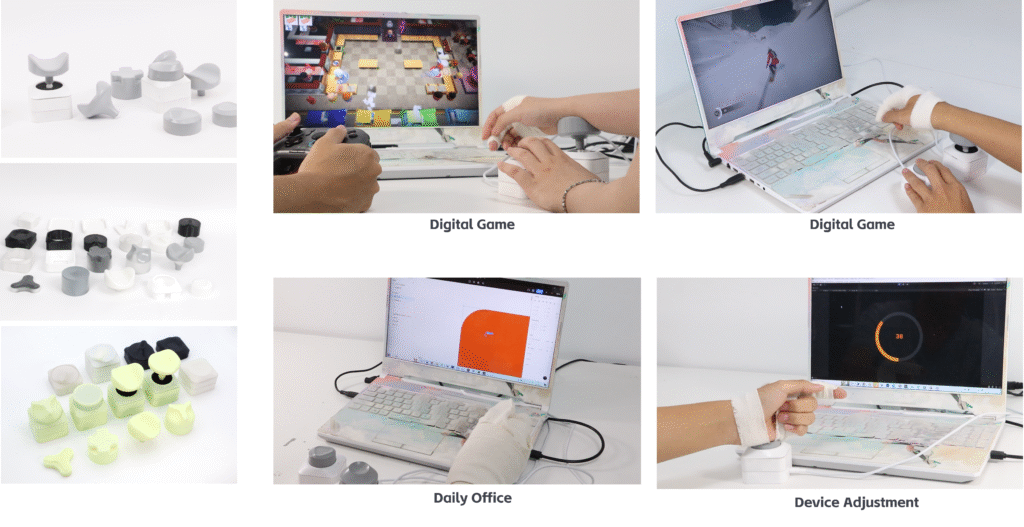
In the end, we completed the initial form of the product with different models of top shells to suit different people.
We also connected the product to the various application scenarios we envisioned for real-world testing and demonstration.
Final Design